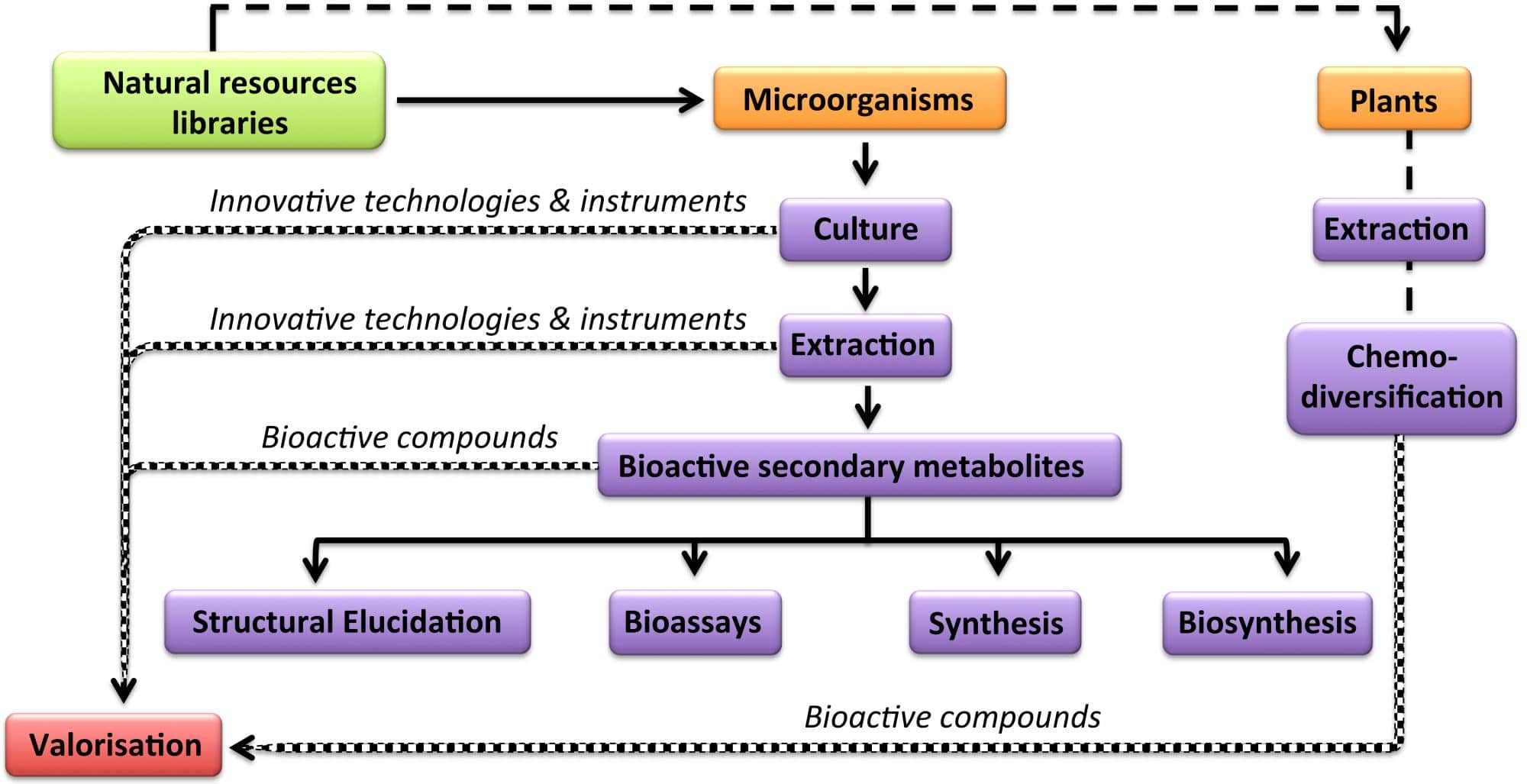
The aim of the Pilot Unit is to investigate innovative tools and strategies to access bioactive microbial secondary metabolites. In parallel, the Pilot Unit is committed to support the effort of small and medium-sized enterprises (SMEs) dedicated to the valorization of plant constituents through original approaches to stand out of competition.
Our strategy is driven by the following observations:
Images


Sustainable and environmentaly friendly extraction. The advantage of Solid Phase Extraction (SPE) in the field of microbial secondary metabolites is well documented. We try to rationalize this type of extraction according to the nature of the target compounds (type of resin, time of contact, In/Off culture extraction …). We recently applied SPE to agar-supported cultivation and demonstrated the advantages of this original solid-solid extraction (SSE). We also investigated specific technologies such as high-pressure extraction or subcritical water extraction. ZipperteX technology is the Pilot Unit contribution to safe, sustainable and environmentaly friendly instruments.
Cell factory instead of chemical factory. Chemical synthesis is mostly driven by efficacy and selectivity, and based on expected and documented methodologies, reactivity and catalysts. Cells are living organisms, which catalyze all chemical reactions efficiently, selectively and in mild condition (Biocatalysis). But in addition to efficacy and selectivity, cells manage xenobiotic compounds in order to take benefit from them (eg. Nutrition) or to get rid of them (detoxification). This specific behaviors of cells often lead to unexpected reactivity and metabolites, opening a new era for chemo-diversification.

Biocatalysis. Enzymes are the life catalyst. In microorganisms, they contribute to bioconversion, bioremediation and secondary metabolites. Enzymes are also involved in key biological processes and many of them are key targets to cure diseases. In the pilot unit, we produce compounds (key) but we produce also proteins (lock) to investigate the lock & key interactions. The Pilot Unit has also valuable contribution in biocatalysis and bioremediation and possess dedicated libraries of microorganisms.